The Question Behind the Records
“Where was he when the war began?”
It’s one of the first questions people ask when they begin researching a First World War ancestor. Once a name or regiment has been identified, the instinct is to picture a starting point — a moment when everything began.
August 1914 feels like that moment. War declared, mobilisation underway, the British Army preparing to cross to France. It is tempting to imagine every soldier already in uniform, already part of that movement. The reality is far more uneven.
Why August 1914 Matters So Much
The opening weeks of the war shaped everything that followed. The small professional army that Britain possessed in 1914 was committed almost immediately, and within months it had taken heavy losses.
For those already serving, August 1914 meant immediate movement toward the front. For everyone else, it marked the beginning of a process — recruitment, training, and eventual deployment that could take months or even years. Understanding where a soldier was at this moment is not just about location. It defines the kind of war he experienced.
The Army Britain Had in August 1914
A Small Professional Force
At the outbreak of war, Britain did not have a mass army ready for continental conflict. The army was a professional force, built for imperial duties rather than large-scale European war. Its core was made up of Regular battalions, supported by reservists who could be recalled quickly.
These were the men who would go to war first — and their starting points varied widely. 1st battalion of the Black Watch (Royal Highland Regiment), for example, could be found in Aldershot, while the 2nd battalion was stationed as far away as India. The same was true across the army.
The British Expeditionary Force
The British Expeditionary Force — the BEF — was deployed within days of mobilisation. These were trained soldiers, many with years of service behind them. By late August 1914, British troops were already engaged in fighting at Mons and beginning the long retreat that defined the opening phase of the war.
For some regiments, this meant movement from home stations such as Aldershot. For others, it meant rapid redeployment from overseas garrisons. 1st battalion of the Royal Fusiliers (City of London Regiment), for instance, began the war in Ireland, whilst 2nd and 3rd were still stationed in India (with the 4th battalion in Ireland) and would not immediately form part of the BEF.
The Role of Reservists
Territorial battalions were quickly recalled to bring battalions up to strength. Many had left the army only a few years earlier and were now returning to active service. These men filled the ranks of Regular battalions and were among the first to be committed to the front. Their experience often mirrored that of the pre-war army — rapid mobilisation, limited preparation, and immediate exposure to combat.
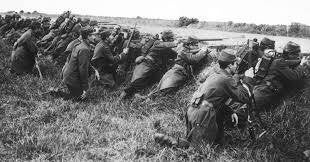
The Men Who Were Not There Yet
The Civilian Majority
The vast majority of men who would eventually serve in the war were not in uniform in August 1914. They were still civilians — working, living normal lives, and watching events unfold through newspapers and public announcements.
A man who would later join a Service Battalion of the Manchester Regiment or the Duke of Cornwall's Light Infantry may still have been at home in early August, with no immediate connection to the army at all.
The Surge of Volunteers
In the weeks following the declaration of war, recruitment surged. Thousands of men volunteered, driven by a mixture of patriotism, pressure, and expectation. New battalions were formed rapidly. In places like Perth, Oxford, and Richmond, entirely new units began to take shape — the 8th Battalion of the Black Watch, 5ht battalion of the Oxfordshire & Buckinghamshire Light Infantry, and the expanding ranks of 6th battalion of the Yorkshire Regiment.
These men did not go straight to the front. Their war began with training, organisation, and often long periods of waiting.
Kitchener’s New Army
Kitchener’s New Army transformed the British Army from a small professional force into a mass army. New battalions were raised in large numbers, often drawing recruits from the same towns and communities.
The Royal Fusiliers are a good example of this expansion. Within months, numerous Service battalions had been raised in London and surrounding areas, each beginning its existence in training rather than combat. For these soldiers, August 1914 was not the start of their war in the same way. Their experience would begin later — often in very different conditions.
Where Soldiers Were Actually Stationed
Overseas Garrisons
Before the war, British troops were spread across the empire. Units were stationed in India, Egypt, and other key locations. This meant that when war broke out, not every soldier was in Britain.
1st battalion of the Suffolk were based in Sudan, 2nd battalion South Wales Borderers were in China and 1st battalion of the Royal Sussex Regiment were in Pakistan, all thousands of miles from the Western Front. Some of these units would return to Europe. Others would serve in entirely different theatres.
Home-Based Units
Many battalions were based in the United Kingdom at the outbreak of war. These units formed the backbone of mobilisation and early deployment. Various regimental depots became focal points for organisation and training. Territorial battalions of the Northumberland Fusiliers, for example, were spread across the towns of Hexham, Walker, Newcastle and Alnwick — local units preparing for a very different kind of war.
Territorial Force Units
Territorial Force battalions were part-time units made up of men who trained locally. In August 1914, they were mobilised for full-time service.
Their starting point was often their home town or regional centre. A Territorial battalion of the Middlesex Regiment might be based in Hornsea or Hounslow, while others remained in Britain for home defence or training before eventual deployment overseas.
Why This Starting Point Matters
Early War vs Later War Experience
A soldier who was part of the BEF in 1914 experienced a very different war to one who arrived later. Early war soldiers faced rapid movement, fluid fighting, and high casualties. Those who joined later often entered a more structured, trench-based war after periods of training. Knowing where a soldier was in August 1914 helps define which of these experiences is more likely.
Regular, Territorial, or New Army
A soldier’s location at the outbreak of war often reflects the type of unit he belonged to. Regular soldiers were already in service, often stationed at key military centres or overseas. Territorial soldiers were mobilised from local units. New Army recruits had not yet joined at all. This distinction shapes everything that follows.
The Foundation of the Story
Before looking at battles, medals, or movements, it is worth understanding this starting point. Whether a soldier began the war in Aldershot, India, Dundee, or simply at home as a civilian waiting to enlist, that moment sets the tone for everything that follows.
From August 1914 to the Wider War
Not Everyone Started Together
One of the biggest misconceptions is that the war began the same way for everyone. In reality, there were multiple starting points. Some men were in action within weeks. Others would not reach the front for over a year.
Building the Bigger Picture
Understanding where a soldier was in August 1914 is not the end of the story — but it is a crucial first step. It helps place him within the structure of the army, the timing of his service, and the type of experience he is likely to have had. From there, the wider picture begins to take shape.
Using the tool to understand the outbreak of WWI
If you’ve got a service number, battalion, or just a regiment, the British Army Service Number Explorer helps place that soldier in context at the outbreak of war — showing where they were most likely positioned in August 1914.